
21 September 2026 at 16:45
To: Support
Cc: Media
Tēnā koe Karl,
Thank you for your response on 1 July to our questions about communications for the 2026 General Election. We're writing again to raise a few concerns that have developed since then, and to follow up on a few points directly.
Access 2026 is a useful document, and we appreciate the detail it provides, including the range of formats and accessible modalities on offer.
We welcome the Commission's plan to develop a new accessibility strategy from 2027. However, digital accessibility and digital equity are not the same thing, and this year's shift towards digital-by-default communication has made that gap visible. The Commission's own accessibility work is about disability. Digital equity is broader: it asks whether anyone, disabled or not, has a working device, affordable data, the skills to use it and the trust to rely on it. The two overlap; for example, disabled people are twice as likely to have no internet access (Stats NZ Wellbeing Statistics 2023), so a strategy that only asks whether a format is accessible will still leave many disabled people without the connection to use it at all. Access 2026 states that the Commission "looks forward to engaging further with Deaf and disabled people, disability organisations, and whānau, carers and communities" to develop the 2027 strategy (p. 33). Digital equity is not mentioned as part of that scope.
Our ask in response to your accessibility work is twofold. First, the Report of the Electoral Commission on the 2026 General Election should assess digital equity as its own line of inquiry, separate from accessibility, given how much of this year's voter communication moved to digital-only channels. Second, digital equity and inclusion organisations should be included in the 2027 strategy consultation in their own right, not folded into the accessibility workstream.
Separately, on the question of voter contact details: between 25 June and 10 September 2026, the vote.nz communications page was updated to describe a data matching process, where the Commission receives information from other government agencies about a voter having moved or become eligible, and may then contact them by letter or email depending on the details it holds. We note that in a Newsroom interview on 25 November 2025, you spoke publicly about the Commission "starting up some data-sharing agreements" to identify electors with out-of-date details and to make greater use of emails and mobile numbers to reach them. That mechanism wasn't mentioned when we asked you directly in June, and we believe it only became visible to voters through this recent change to the vote.nz page.
We're asking because the shift away from a postal guarantee only works fairly if the contact detail used to replace it is accurate, belongs to the right person, and is actively monitored by that person. A voter who never gave an email address, but whose details are being sourced from another agency, has no way of knowing this is happening or checking that it's correct. Without a postal fallback, an unverified contact detail is not just an inconvenience. It can mean someone never sees a voting reminder or an EasyVote card at all. A direct answer would help: where do voters' email addresses and mobile numbers come from, is data matching one of those sources, and how is a contact detail confirmed as current and correctly matched to the right person before it's used to reach them?
Lastly, on zero-data access: we first raised the question of zero-data portal access to vote.nz in our enquiry on 29 June 2026. On 15 July, when asked about this on RNZ's Nine to Noon, you said it was "something we can definitely have a look at." As far as we know, vote.nz is still not available through the zero-data portal. Could you let us know whether this has been assessed, whether a decision has been made either way, and if there's a timeline for it, given the rapidly approaching enrolment deadline?
Happy to talk this through directly if that's useful, and a response on the record would be appreciated given we're documenting this publicly, as with our earlier correspondence.
Ngā mihi,
Marie Silberstein and Katie Brown
Digital Equity Coalition Aotearoa and Te Hapori Matihiko
21 September 2026: Changes to voter information delivery for the 2026 General Election
21 September 2026: Changes to voter information delivery for the 2026 General Election
21 September 2026 at 16:45
To: Support
Cc: Media
Tēnā koe Karl,
Thank you for your response on 1 July to our questions about communications for the 2026 General Election. We're writing again to raise a few concerns that have developed since then, and to follow up on a few points directly.
Access 2026 is a useful document, and we appreciate the detail it provides, including the range of formats and accessible modalities on offer.
We welcome the Commission's plan to develop a new accessibility strategy from 2027. However, digital accessibility and digital equity are not the same thing, and this year's shift towards digital-by-default communication has made that gap visible. The Commission's own accessibility work is about disability. Digital equity is broader: it asks whether anyone, disabled or not, has a working device, affordable data, the skills to use it and the trust to rely on it. The two overlap; for example, disabled people are twice as likely to have no internet access (Stats NZ Wellbeing Statistics 2023), so a strategy that only asks whether a format is accessible will still leave many disabled people without the connection to use it at all. Access 2026 states that the Commission "looks forward to engaging further with Deaf and disabled people, disability organisations, and whānau, carers and communities" to develop the 2027 strategy (p. 33). Digital equity is not mentioned as part of that scope.
Our ask in response to your accessibility work is twofold. First, the Report of the Electoral Commission on the 2026 General Election should assess digital equity as its own line of inquiry, separate from accessibility, given how much of this year's voter communication moved to digital-only channels. Second, digital equity and inclusion organisations should be included in the 2027 strategy consultation in their own right, not folded into the accessibility workstream.
Separately, on the question of voter contact details: between 25 June and 10 September 2026, the vote.nz communications page was updated to describe a data matching process, where the Commission receives information from other government agencies about a voter having moved or become eligible, and may then contact them by letter or email depending on the details it holds. We note that in a Newsroom interview on 25 November 2025, you spoke publicly about the Commission "starting up some data-sharing agreements" to identify electors with out-of-date details and to make greater use of emails and mobile numbers to reach them. That mechanism wasn't mentioned when we asked you directly in June, and we believe it only became visible to voters through this recent change to the vote.nz page.
We're asking because the shift away from a postal guarantee only works fairly if the contact detail used to replace it is accurate, belongs to the right person, and is actively monitored by that person. A voter who never gave an email address, but whose details are being sourced from another agency, has no way of knowing this is happening or checking that it's correct. Without a postal fallback, an unverified contact detail is not just an inconvenience. It can mean someone never sees a voting reminder or an EasyVote card at all. A direct answer would help: where do voters' email addresses and mobile numbers come from, is data matching one of those sources, and how is a contact detail confirmed as current and correctly matched to the right person before it's used to reach them?
Lastly, on zero-data access: we first raised the question of zero-data portal access to vote.nz in our enquiry on 29 June 2026. On 15 July, when asked about this on RNZ's Nine to Noon, you said it was "something we can definitely have a look at." As far as we know, vote.nz is still not available through the zero-data portal. Could you let us know whether this has been assessed, whether a decision has been made either way, and if there's a timeline for it, given the rapidly approaching enrolment deadline?
Happy to talk this through directly if that's useful, and a response on the record would be appreciated given we're documenting this publicly, as with our earlier correspondence.
Ngā mihi,
Marie Silberstein and Katie Brown
Digital Equity Coalition Aotearoa and Te Hapori Matihiko
With the deadline to switch between the Māori roll and the general roll closing at midnight on 6 August, two of the three ways to verify identity on the Electoral Commission's enrolment system went down for large parts of last weekend.
RealMe was unavailable from 7am to 6pm on Sunday. Passport verification was unavailable from 10pm Saturday until 2.30pm Sunday. That left driver's licence as the only working option for anyone trying to enrol or switch rolls online during those hours.
This is not an abstract risk. In July we shared an account from a community support worker trying to help a man with a long-term disability enrol to vote. He had no driver's licence, no passport, and no RealMe, and building a RealMe account required more ID than he had. Online enrolment was not possible for him at all. The outage this weekend shows what happens to that same barrier when it's temporary rather than permanent: for a full day, driver's licence was the only door left open to everyone, not just people without other ID.
Electoral Commission Chief Executive Karl Le Quesne said the outage was due to planned maintenance by the Department of Internal Affairs, that the Commission was notified on 27 July, and that banners were added to the enrolment system to reflect this. He said people could still use their driver's licence during the outage.
Justice Minister Paul Goldsmith said the outage "did not sound very helpful" but that people had "plenty of time" to switch rolls.
Te Pāti Māori co-leader Rawiri Waititi called the outage unacceptable, and said it was of particular concern that Māori wanting to enrol on or switch to the Māori roll could not do so during the affected hours. Co-leader Debbie Ngarewa-Packer also raised concerns. Waititi said the responsibility sits with government agencies to make voting services accessible, reliable, and available to everyone, and that Māori participation in democracy should never be compromised by system failures.
Sources
Gabel, J. (2026, August 4). Electoral enrolment website outage 'unacceptable' in final days before roll-switch deadline. NZ Herald.
4 August 2026: RealMe and passport verification down in the final days before the roll-switch deadline
4 August 2026: RealMe and passport verification down in the final days before the roll-switch deadline
With the deadline to switch between the Māori roll and the general roll closing at midnight on 6 August, two of the three ways to verify identity on the Electoral Commission's enrolment system went down for large parts of last weekend.
RealMe was unavailable from 7am to 6pm on Sunday. Passport verification was unavailable from 10pm Saturday until 2.30pm Sunday. That left driver's licence as the only working option for anyone trying to enrol or switch rolls online during those hours.
This is not an abstract risk. In July we shared an account from a community support worker trying to help a man with a long-term disability enrol to vote. He had no driver's licence, no passport, and no RealMe, and building a RealMe account required more ID than he had. Online enrolment was not possible for him at all. The outage this weekend shows what happens to that same barrier when it's temporary rather than permanent: for a full day, driver's licence was the only door left open to everyone, not just people without other ID.
Electoral Commission Chief Executive Karl Le Quesne said the outage was due to planned maintenance by the Department of Internal Affairs, that the Commission was notified on 27 July, and that banners were added to the enrolment system to reflect this. He said people could still use their driver's licence during the outage.
Justice Minister Paul Goldsmith said the outage "did not sound very helpful" but that people had "plenty of time" to switch rolls.
Te Pāti Māori co-leader Rawiri Waititi called the outage unacceptable, and said it was of particular concern that Māori wanting to enrol on or switch to the Māori roll could not do so during the affected hours. Co-leader Debbie Ngarewa-Packer also raised concerns. Waititi said the responsibility sits with government agencies to make voting services accessible, reliable, and available to everyone, and that Māori participation in democracy should never be compromised by system failures.
Sources
Gabel, J. (2026, August 4). Electoral enrolment website outage 'unacceptable' in final days before roll-switch deadline. NZ Herald.
Justice Minister Paul Goldsmith has been quoted saying that removing postal requirements from the Electoral Amendment Act is "helping to keep people contactable and participating in democracy."
Asked why EasyVote cards and party information will now default to be sent via email, Chief Electoral Officer Karl Le Quesne said, "We're not confident that we can get it out at the same time as last election," pointing to NZ Post's declining service.
That's two different justifications for removing post as a channel for delivering voting information. One frames it as an improvement made for people's benefit. The other frames it as an operational necessity.
Neither is good enough. Especially without giving people options, and without letting them know they've been defaulted into digital communication.
Removing the postal requirement doesn't magically make someone more contactable. It only works if a person has given consent to be emailed, and is therefore saying, I will check my email, it's a reliable channel for me.
That consent hasn't been given. No one chose this. It was decided for them.
Sources
Palmer, R. (2026, July 20). Voter enrolment changes 'an indictment' on coalition, Hipkins says. RNZ.
Dirga, N. (2026, July 15). Explainer: Why EasyVote cards may no longer be mailed to you. RNZ.
July 20 2026: Two different reasons for the digital shift
July 20 2026: Two different reasons for the digital shift
Justice Minister Paul Goldsmith has been quoted saying that removing postal requirements from the Electoral Amendment Act is "helping to keep people contactable and participating in democracy."
Asked why EasyVote cards and party information will now default to be sent via email, Chief Electoral Officer Karl Le Quesne said, "We're not confident that we can get it out at the same time as last election," pointing to NZ Post's declining service.
That's two different justifications for removing post as a channel for delivering voting information. One frames it as an improvement made for people's benefit. The other frames it as an operational necessity.
Neither is good enough. Especially without giving people options, and without letting them know they've been defaulted into digital communication.
Removing the postal requirement doesn't magically make someone more contactable. It only works if a person has given consent to be emailed, and is therefore saying, I will check my email, it's a reliable channel for me.
That consent hasn't been given. No one chose this. It was decided for them.
Sources
Palmer, R. (2026, July 20). Voter enrolment changes 'an indictment' on coalition, Hipkins says. RNZ.
Dirga, N. (2026, July 15). Explainer: Why EasyVote cards may no longer be mailed to you. RNZ.
July 15 2026: Katie Brown and the Chief Electoral Officer on RNZ
July 15 2026: Katie Brown and the Chief Electoral Officer on RNZ
Interviewed on Nine to Noon with Kathryn Ryan.
Elections move from post to digital concerns equity advocates
Explainer: The Electoral Commission has said it will default this year to sending election information to many voters by email instead of post.
The commission said that people will now get their EasyVote card and list of local electoral candidates by email. You'll only automatically get it in the post if they don't have an email on file for you.
The Digital Equity Coalition and Māori technology initiative Te Hapori Matihiko have criticised the changes online, accusing the Electoral Commission of quietly changing how it reaches out to voters before the 7 November election.
Chief Electoral Officer Karl Le Quesne said the shrinking of NZ Post services was partially to blame and the commission had long been signalling its shift towards more digital communication.
"It's really important people get accurate, timely information about how to enrol and vote," he told RNZ's Nine To Noon.
"What we've found is that's becoming increasingly difficult with the postal service and it's mainly around the time it takes to get that information out."
Te Hapori Matihiko founder and chief executive Katie Brown told Nine To Noon that the pivot away from using the post could put barriers up for many people.
"We are pro-digital, pro-technology but that has to bring everybody along."
Here's what we know so far.
Will I get my EasyVote card and candidate list in the post?
The Electoral Commission said if you're enrolled by 4 October, and they have your email on file, you'll receive your EasyVote card and electorate candidates list by email instead of in your mailbox.
The pack has in past years also included lists of candidates and voting places.
If the commission just has your postal address or you are on the unpublished roll, it will still be sent by post.
EasyVote cards aren't mandatory - but they do help staff find your name and details on the electoral roll on Election Day, the commission has said.
"The last few elections we've struggled to get the EasyVote card out to people before voting starts and that's just become more and more challenging," Le Quesne said.
"The major concern is that it's not optional," Wilson said. "It's not an opt-in op-out, it's an 'if we have your email address you will only receive communications from us on email.'"
She said that older people, rangatahi and the disability community were groups that often got excluded when there were quick technological advances.
Voters will still be getting some information by mail - more than 3.6 million people who are already enrolled will get letters in August asking them to confirm their registration details, the commission said.
"Post remains an important way of communicating with voters," Le Quesne said.
In April, 562,000 voters of Māori descent also got letters about the choice between the Māori electoral roll and the general roll.
Why can't they just send it all out by post?
Le Quesne said the main reason is the sharp drop in postal delivery services. NZ Post has been dealing with a sharp drop in mail and earlier this year announced the closure of many service counters and more likely cuts to delivery days.
NZ Post chief executive David Walsh recently told RNZ most addresses now only receive one or two letters a week on average.
Le Quesne said that EasyVote cards can't be posted until after the writ day, when the governor-general issues a formal direction to hold the election, at which time the voting rolls are printed. This year it's on 4 October.
He said that as the postal service contracts, the turnaround for getting out the information has become tighter even since 2023's election.
"We're not confident that we can get it out at the same time as last election."
"It would get to the point where the EasyVote card - which you don't need to vote - would not be worth sending out."
Te Hapori Matihiko doesn't agree with that approach.
"I don't think it's a valid reason at all," Wilson said.
"I think it's something that they need to work through and work with NZ Post.
"This is a very critical, important moment for our nation and for the post to be holding up people's democratic right to vote seems insane. It seems like that's something that should have been considered earlier."
What if you want to get the EasyVote card and candidate information by post only?
You will have to change the details of your voter registration, and you will have to do that by contacting the Electoral Commission directly.
"If you don't want to receive email or text messages, you can remove your email address or mobile phone number from your enrolment record by writing the instruction on a paper enrolment form or calling us on 0800 36 76 56," Le Quesne said in response to RNZ queries.
You are required to provide an email address and phone number when you enrol or update your details online - meaning paper or a phone call is the only way to go to make these changes.
How to check your enrolment information online (you'll need a New Zealand drivers licence, passport or RealMe login ID to do so)
What's the 0800 number again? 0800 36 76 56
Removing your email and phone details from the voter rolls may have another side effect, however.
"Removing those contact details means they may miss out on important information about enrolling and voting, and if we get mail returned to us, we won't have another way of contacting the voter," Le Quesne said.
Interviewed on Nine to Noon with Kathryn Ryan.
Elections move from post to digital concerns equity advocates
Explainer: The Electoral Commission has said it will default this year to sending election information to many voters by email instead of post.
The commission said that people will now get their EasyVote card and list of local electoral candidates by email. You'll only automatically get it in the post if they don't have an email on file for you.
The Digital Equity Coalition and Māori technology initiative Te Hapori Matihiko have criticised the changes online, accusing the Electoral Commission of quietly changing how it reaches out to voters before the 7 November election.
Chief Electoral Officer Karl Le Quesne said the shrinking of NZ Post services was partially to blame and the commission had long been signalling its shift towards more digital communication.
"It's really important people get accurate, timely information about how to enrol and vote," he told RNZ's Nine To Noon.
"What we've found is that's becoming increasingly difficult with the postal service and it's mainly around the time it takes to get that information out."
Te Hapori Matihiko founder and chief executive Katie Brown told Nine To Noon that the pivot away from using the post could put barriers up for many people.
"We are pro-digital, pro-technology but that has to bring everybody along."
Here's what we know so far.
Will I get my EasyVote card and candidate list in the post?
The Electoral Commission said if you're enrolled by 4 October, and they have your email on file, you'll receive your EasyVote card and electorate candidates list by email instead of in your mailbox.
The pack has in past years also included lists of candidates and voting places.
If the commission just has your postal address or you are on the unpublished roll, it will still be sent by post.
EasyVote cards aren't mandatory - but they do help staff find your name and details on the electoral roll on Election Day, the commission has said.
"The last few elections we've struggled to get the EasyVote card out to people before voting starts and that's just become more and more challenging," Le Quesne said.
"The major concern is that it's not optional," Wilson said. "It's not an opt-in op-out, it's an 'if we have your email address you will only receive communications from us on email.'"
She said that older people, rangatahi and the disability community were groups that often got excluded when there were quick technological advances.
Voters will still be getting some information by mail - more than 3.6 million people who are already enrolled will get letters in August asking them to confirm their registration details, the commission said.
"Post remains an important way of communicating with voters," Le Quesne said.
In April, 562,000 voters of Māori descent also got letters about the choice between the Māori electoral roll and the general roll.
Why can't they just send it all out by post?
Le Quesne said the main reason is the sharp drop in postal delivery services. NZ Post has been dealing with a sharp drop in mail and earlier this year announced the closure of many service counters and more likely cuts to delivery days.
NZ Post chief executive David Walsh recently told RNZ most addresses now only receive one or two letters a week on average.
Le Quesne said that EasyVote cards can't be posted until after the writ day, when the governor-general issues a formal direction to hold the election, at which time the voting rolls are printed. This year it's on 4 October.
He said that as the postal service contracts, the turnaround for getting out the information has become tighter even since 2023's election.
"We're not confident that we can get it out at the same time as last election."
"It would get to the point where the EasyVote card - which you don't need to vote - would not be worth sending out."
Te Hapori Matihiko doesn't agree with that approach.
"I don't think it's a valid reason at all," Wilson said.
"I think it's something that they need to work through and work with NZ Post.
"This is a very critical, important moment for our nation and for the post to be holding up people's democratic right to vote seems insane. It seems like that's something that should have been considered earlier."
What if you want to get the EasyVote card and candidate information by post only?
You will have to change the details of your voter registration, and you will have to do that by contacting the Electoral Commission directly.
"If you don't want to receive email or text messages, you can remove your email address or mobile phone number from your enrolment record by writing the instruction on a paper enrolment form or calling us on 0800 36 76 56," Le Quesne said in response to RNZ queries.
You are required to provide an email address and phone number when you enrol or update your details online - meaning paper or a phone call is the only way to go to make these changes.
How to check your enrolment information online (you'll need a New Zealand drivers licence, passport or RealMe login ID to do so)
What's the 0800 number again? 0800 36 76 56
Removing your email and phone details from the voter rolls may have another side effect, however.
"Removing those contact details means they may miss out on important information about enrolling and voting, and if we get mail returned to us, we won't have another way of contacting the voter," Le Quesne said.
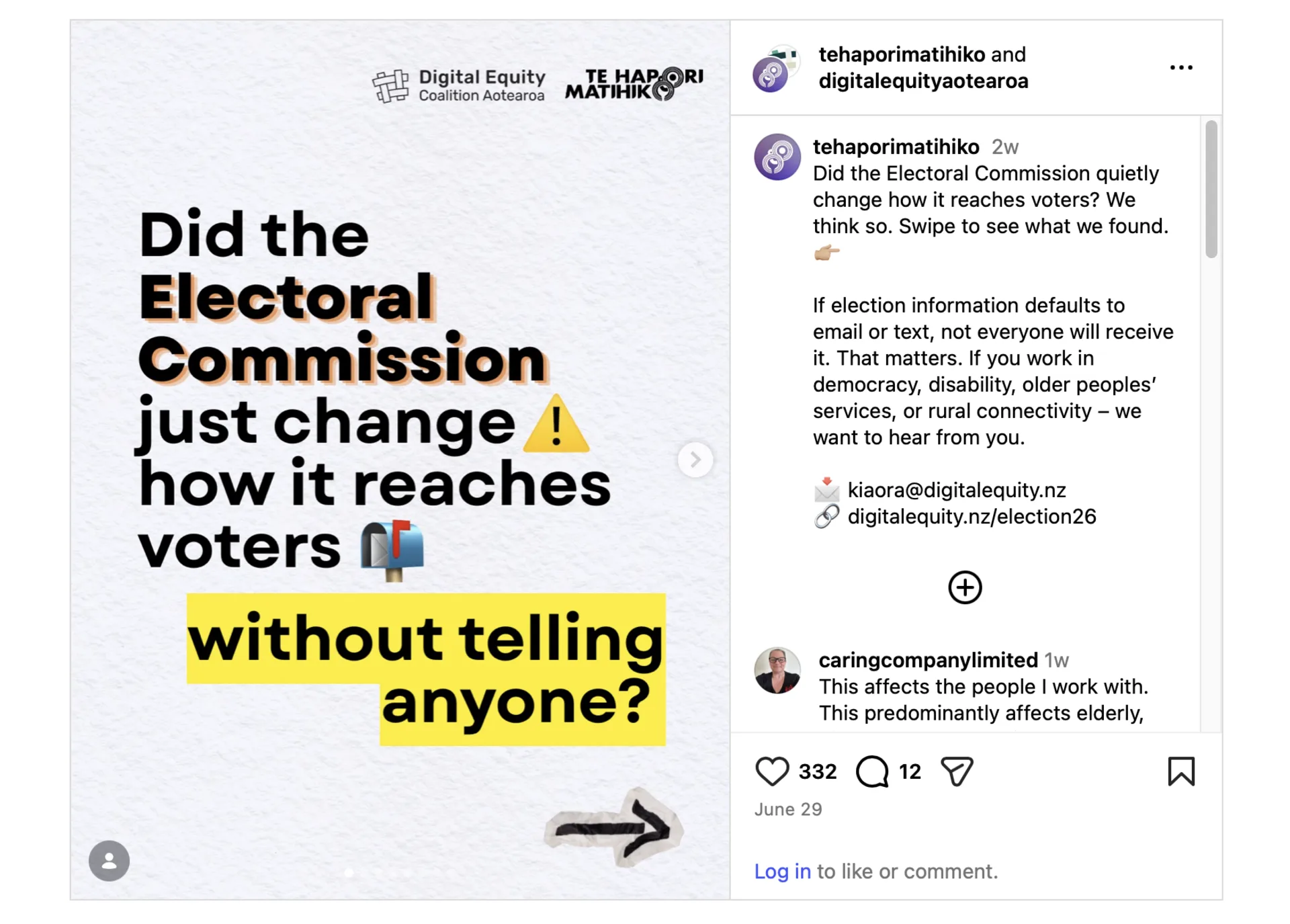
A post by Digital Equity Coalition and Māori technology initiative Te Hapori Matihiko about election information changes.
Has the public been notified enough about this?
Digital Equity Aotearoa and Te Hapori Matihiko have said in online posts that the change was sudden and poorly notified.
"We found no public notice of this change," they said in social media posts.
"By their own website and by their own words they said it was gradual but immediately switching people to email only to receive their easy vote cards and party lists is quite a concern to us," Wilson said.
However, Le Quesne said the commission "clearly signalled" the move to digital communications in reports to Parliament and the public in media releases and conferences.
"In the enrolment update campaign we did before the local elections last year, we included a flyer asking people to give us their email addresses for future communications.
"We understand not everyone has access to the internet or digital devices, which is why we use a range of channels to reach people, including post, email, text messages, advertising, social media, stakeholder and face to face community engagement."
How will they know they've got my correct email or phone number?
The commission can see if sent emails are delivered and opened, Le Quesne told Nine To Noon.
"If we find in one of the reminders that we do that the email address doesn't work, we won't persist with it, we will send it by post."
If the email isn't opened, "if we have their mobile number we'll send them a text reminder as well".
But many people have multiple email accounts, spam filters or don't check messages, Wilson said.
"I don't know about you but I delete a lot of emails, there's a huge risk that people will miss these," she said.
Wilson said there are also concerns that vote.nz is not a 'zero data portal,' which allows broader access. It allows free access to essential services online.
"A zero data portal means that even if you do not have data you will be able to access that website," she said.
Le Quesne said changes to the website are "something we can definitely have a look at".
Will this affect voting?
"Our priority is to ensure every eligible New Zealander can take part in New Zealand's upcoming general election," Le Quesne said.
Wilson said Digital Equity Coalition and Te Hapori Matihiko have serious concerns about the move to digital.
"There's quite a few assumptions there," she said.
"The assumption is that people check those email addresses, that people have access to technology devices, have access to the internet, are technically capable ... these are all assumptions the Electoral Commission has made in making them switch.
"I think about my nana who's in a retirement home - she's got a phone, she's got an email address, she's got Facebook, but she really struggles to use that phone and see things and read things on there.
"She's now expected to read all the party list, find her EasyVote card in her email, and then bring that with her and her phone to vote."
It's not the only difference for this year's election.
Other changes were brought in with the Electoral Amendment Bill passed at the end of last year. You can now no longer enrol to vote on Election Day and will be required to register no later than 13 days before the election.
"That took away a whole lot of barriers for people," Wilson said.
"Now that we've moved to email, now that we've no post, the same group is getting hit twice."
A post by Digital Equity Coalition and Māori technology initiative Te Hapori Matihiko about election information changes.
Has the public been notified enough about this?
Digital Equity Aotearoa and Te Hapori Matihiko have said in online posts that the change was sudden and poorly notified.
"We found no public notice of this change," they said in social media posts.
"By their own website and by their own words they said it was gradual but immediately switching people to email only to receive their easy vote cards and party lists is quite a concern to us," Wilson said.
However, Le Quesne said the commission "clearly signalled" the move to digital communications in reports to Parliament and the public in media releases and conferences.
"In the enrolment update campaign we did before the local elections last year, we included a flyer asking people to give us their email addresses for future communications.
"We understand not everyone has access to the internet or digital devices, which is why we use a range of channels to reach people, including post, email, text messages, advertising, social media, stakeholder and face to face community engagement."
How will they know they've got my correct email or phone number?
The commission can see if sent emails are delivered and opened, Le Quesne told Nine To Noon.
"If we find in one of the reminders that we do that the email address doesn't work, we won't persist with it, we will send it by post."
If the email isn't opened, "if we have their mobile number we'll send them a text reminder as well".
But many people have multiple email accounts, spam filters or don't check messages, Wilson said.
"I don't know about you but I delete a lot of emails, there's a huge risk that people will miss these," she said.
Wilson said there are also concerns that vote.nz is not a 'zero data portal,' which allows broader access. It allows free access to essential services online.
"A zero data portal means that even if you do not have data you will be able to access that website," she said.
Le Quesne said changes to the website are "something we can definitely have a look at".
Will this affect voting?
"Our priority is to ensure every eligible New Zealander can take part in New Zealand's upcoming general election," Le Quesne said.
Wilson said Digital Equity Coalition and Te Hapori Matihiko have serious concerns about the move to digital.
"There's quite a few assumptions there," she said.
"The assumption is that people check those email addresses, that people have access to technology devices, have access to the internet, are technically capable ... these are all assumptions the Electoral Commission has made in making them switch.
"I think about my nana who's in a retirement home - she's got a phone, she's got an email address, she's got Facebook, but she really struggles to use that phone and see things and read things on there.
"She's now expected to read all the party list, find her EasyVote card in her email, and then bring that with her and her phone to vote."
It's not the only difference for this year's election.
Other changes were brought in with the Electoral Amendment Bill passed at the end of last year. You can now no longer enrol to vote on Election Day and will be required to register no later than 13 days before the election.
"That took away a whole lot of barriers for people," Wilson said.
"Now that we've moved to email, now that we've no post, the same group is getting hit twice."
Experience of trying to support someone who is digitally excluded to enrol to vote.
There are many people who are part of a community group that I’m involved with who face barriers to accessing information and services because of the shift to prioritising digital options. Being mindful of this, I thought I would offer to help people enrol to vote.
A Māori man in his 30s wanted to enrol to vote. I had my laptop with me and thought we could have a go at enrolling online. We started with the eligibility questions.
Over 18 – yes, live in NZ – yes, NZ citizen – yes, lived in NZ for more than 12 months – yes.
All good – eligible to vote.
Next step… to enrol online, you need to verify your identity.
Use 1 of these ways to verify your identity:
● Your New Zealand driver licence
● Your New Zealand passport
● Your RealMe verified identity
July 13 2026: An email from a community support worker
July 13 2026: An email from a community support worker
Experience of trying to support someone who is digitally excluded to enrol to vote.
There are many people who are part of a community group that I’m involved with who face barriers to accessing information and services because of the shift to prioritising digital options. Being mindful of this, I thought I would offer to help people enrol to vote.
A Māori man in his 30s wanted to enrol to vote. I had my laptop with me and thought we could have a go at enrolling online. We started with the eligibility questions.
Over 18 – yes, live in NZ – yes, NZ citizen – yes, lived in NZ for more than 12 months – yes.
All good – eligible to vote.
Next step… to enrol online, you need to verify your identity.
Use 1 of these ways to verify your identity:
● Your New Zealand driver licence
● Your New Zealand passport
● Your RealMe verified identity
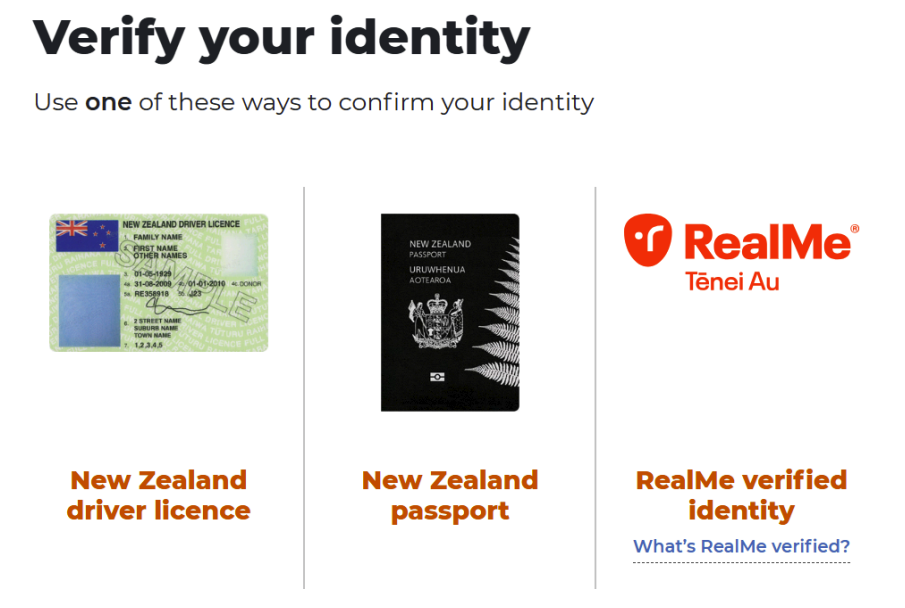
This person had none of the above. He has a long-term disability and does not drive. He does not have a passport. We explored what it would like for him to get his RealMe set up, but this required more ID he didn’t have.
Applying online was not a goer.
I thought perhaps then we could fill in a form and submit it online. There was an option of filling in the form on the website so it could then be emailed or posted to you to sign and return.
This person had none of the above. He has a long-term disability and does not drive. He does not have a passport. We explored what it would like for him to get his RealMe set up, but this required more ID he didn’t have.
Applying online was not a goer.
I thought perhaps then we could fill in a form and submit it online. There was an option of filling in the form on the website so it could then be emailed or posted to you to sign and return.
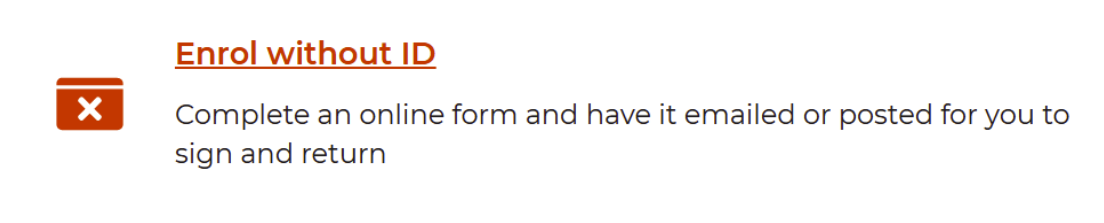
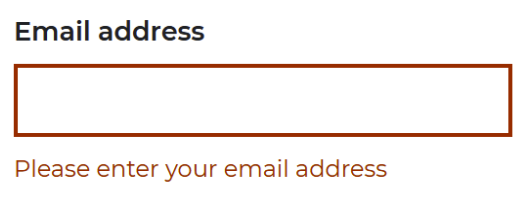
We looked at this option but couldn’t get past the first page as it required you to fill in an email address.
We looked at this option but couldn’t get past the first page as it required you to fill in an email address.
We went down the other route and found the form and downloaded it. Unfortunately, it was not possible to fill in the form on my computer – the fields could not be clicked into. The only option for filling in the form was to print it out and fill it in and then re-upload it. We didn’t have access to a printer.
I then thought perhaps if we phone the Electoral Commission someone can just help us over the phone. We phoned and listened to the voice encouraging us to go online.
When we spoke to someone I explained that I was trying to help a person enrol who had limited digital access and didn’t have ID. I explained that a number of people in my community were in this situation. I asked if we could have some forms sent to us. The man I was supporting wanted the forms to be sent to me as he wanted me to help him next time I saw him.
I asked if we could have a number of forms so I could also help others. I was asked if I wanted more than 10 forms. I said I wanted about 10. I was then told if I wanted 10 or more they would give me a link to an online portal to order some forms. I said, I just want to order some forms right now, so less than 10 was fine. The person on the other end of the phone then said they just needed some details. The first question they asked me was my email address. I asked why they needed my email address as I was wanting them to post the forms to me. They said it was just part of the information they needed to collect.
I ordered the forms to my home address with the hope I would have them in time for when I would see the man at the community event the next week.
Just over a week later on a wet, rainy evening I found in my letterbox 9 individual envelopes addressed to me with a single enrolment form and blank slip of paper inside. Three of the envelopes were particularly soggy but I was able to dry them out. I have since supported the man to fill in the enrolment form and now have it sitting back with me as the options for getting it back to the Electoral Commission are either to email it, upload it to the website or post it (no envelope was supplied!)**.
We went down the other route and found the form and downloaded it. Unfortunately, it was not possible to fill in the form on my computer – the fields could not be clicked into. The only option for filling in the form was to print it out and fill it in and then re-upload it. We didn’t have access to a printer.
I then thought perhaps if we phone the Electoral Commission someone can just help us over the phone. We phoned and listened to the voice encouraging us to go online.
When we spoke to someone I explained that I was trying to help a person enrol who had limited digital access and didn’t have ID. I explained that a number of people in my community were in this situation. I asked if we could have some forms sent to us. The man I was supporting wanted the forms to be sent to me as he wanted me to help him next time I saw him.
I asked if we could have a number of forms so I could also help others. I was asked if I wanted more than 10 forms. I said I wanted about 10. I was then told if I wanted 10 or more they would give me a link to an online portal to order some forms. I said, I just want to order some forms right now, so less than 10 was fine. The person on the other end of the phone then said they just needed some details. The first question they asked me was my email address. I asked why they needed my email address as I was wanting them to post the forms to me. They said it was just part of the information they needed to collect.
I ordered the forms to my home address with the hope I would have them in time for when I would see the man at the community event the next week.
Just over a week later on a wet, rainy evening I found in my letterbox 9 individual envelopes addressed to me with a single enrolment form and blank slip of paper inside. Three of the envelopes were particularly soggy but I was able to dry them out. I have since supported the man to fill in the enrolment form and now have it sitting back with me as the options for getting it back to the Electoral Commission are either to email it, upload it to the website or post it (no envelope was supplied!)**.
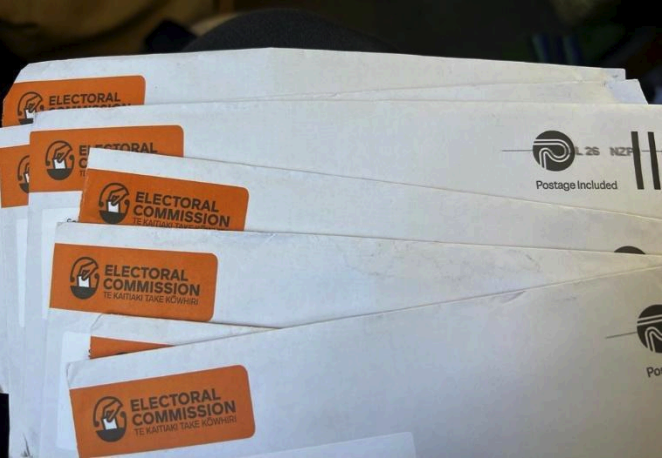
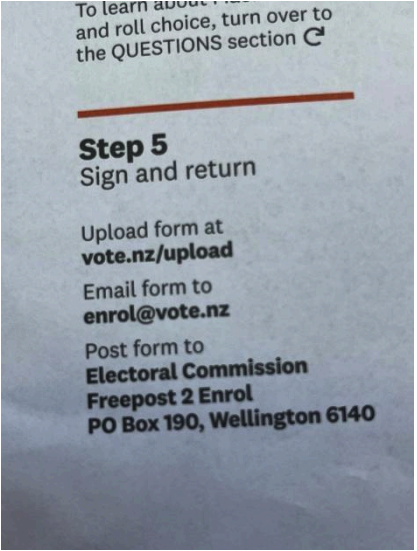
** Subsequently an envelope was opened and there was in fact a prepaid envelope inside each envelope.
** Subsequently an envelope was opened and there was in fact a prepaid envelope inside each envelope.
6 July 2026 - What the Electoral Commission's response tells us
6 July 2026 - What the Electoral Commission's response tells us
On 1 July the Chief Electoral Officer, Karl Le Quesne, responded to the questions Te Hapori Matihiko and DECA put to the Commission on 29 June. His full response is below this post.
What the Commission confirmed:
The EasyVote card, posted to voters until now, will this year be sent by email where the Commission holds an email address. It will only arrive by post if they do not have your email address on file. Your electorate candidate list is sent with it.
Party lists and voting place locations will no longer be delivered at all, by any channel. They will be available online at vote.nz or by calling 0800 36 76 56.
Vote.nz is not available through the zero-data portal. You will need a working device and internet data, or a phone able to call the 0800 number, to access EasyVote emails, party lists and voting place information this year.
The stated reason for the change is that changes to postal services and population growth mean the Commission can no longer deliver EasyVote cards to everyone by post in time.
What we asked that was not answered:
We asked whether public consultation was undertaken before this change. The response describes surveys, engagement panels and stakeholder discussions, but does not confirm consultation on this specific change, and does not point to any equity or Te Tiriti o Waitangi impact assessment.
We asked how the Commission obtains voters' email addresses and mobile numbers, and whether those details are verified as current and belonging to the enrolled voter. The response does not directly address this. It refers to details given "when they enrolled or updated their details," but does not explain whether contact details are drawn from any other source. It does not describe any verification process that checks whether an email address or phone number is current, or that it belongs to the enrolled voter.
What concerns us:
To receive information by post, a voter must remove their email and phone from their record. There is no option to keep those details on file and still choose post. And the Commission confirms that if a voter does remove their email and phone details and their postal address is not current, mail may be returned and it has "no other way of contacting the voter."
An email address on file is treated as a working channel. An inbox can exist and never be read. The email on file may not be opened by the voter it is intended for. There appears to be no way to check if the message was received.
The response confirms EasyVote cards will be emailed, but does not say what form the emailed card takes, whether it needs to be printed, or what a voter without a printer or smartphone is expected to do with it. Receiving a card by email is not the same as being able to use one.
The “gradual process”
The Commission describes its change from post to digital communication as "a gradual process that requires years of planning" and says it "will happen over several election cycles." We take that seriously, because gradual is the right approach. But the change to EasyVote and candidate information is happening now, in a single cycle, for every voter whose email address the Commission holds. There is nothing gradual about removing the postal default in one step.
A genuinely gradual transition would keep post as the default while digital is introduced alongside it, so that no one loses a channel that works for them before the alternative is proven to reach them. It would invest in the digital access and skills that make the shift safe for the people most affected, rather than moving ahead of them. It would co-design communications with communities to ensure everyone in Aotearoa understands what this change means for them and allow for the time to receive feedback. The Commission's own framing, gradual, over several cycles, is the standard we are asking it to hold itself to.
On 1 July the Chief Electoral Officer, Karl Le Quesne, responded to the questions Te Hapori Matihiko and DECA put to the Commission on 29 June. His full response is below this post.
What the Commission confirmed:
The EasyVote card, posted to voters until now, will this year be sent by email where the Commission holds an email address. It will only arrive by post if they do not have your email address on file. Your electorate candidate list is sent with it.
Party lists and voting place locations will no longer be delivered at all, by any channel. They will be available online at vote.nz or by calling 0800 36 76 56.
Vote.nz is not available through the zero-data portal. You will need a working device and internet data, or a phone able to call the 0800 number, to access EasyVote emails, party lists and voting place information this year.
The stated reason for the change is that changes to postal services and population growth mean the Commission can no longer deliver EasyVote cards to everyone by post in time.
What we asked that was not answered:
We asked whether public consultation was undertaken before this change. The response describes surveys, engagement panels and stakeholder discussions, but does not confirm consultation on this specific change, and does not point to any equity or Te Tiriti o Waitangi impact assessment.
We asked how the Commission obtains voters' email addresses and mobile numbers, and whether those details are verified as current and belonging to the enrolled voter. The response does not directly address this. It refers to details given "when they enrolled or updated their details," but does not explain whether contact details are drawn from any other source. It does not describe any verification process that checks whether an email address or phone number is current, or that it belongs to the enrolled voter.
What concerns us:
To receive information by post, a voter must remove their email and phone from their record. There is no option to keep those details on file and still choose post. And the Commission confirms that if a voter does remove their email and phone details and their postal address is not current, mail may be returned and it has "no other way of contacting the voter."
An email address on file is treated as a working channel. An inbox can exist and never be read. The email on file may not be opened by the voter it is intended for. There appears to be no way to check if the message was received.
The response confirms EasyVote cards will be emailed, but does not say what form the emailed card takes, whether it needs to be printed, or what a voter without a printer or smartphone is expected to do with it. Receiving a card by email is not the same as being able to use one.
The “gradual process”
The Commission describes its change from post to digital communication as "a gradual process that requires years of planning" and says it "will happen over several election cycles." We take that seriously, because gradual is the right approach. But the change to EasyVote and candidate information is happening now, in a single cycle, for every voter whose email address the Commission holds. There is nothing gradual about removing the postal default in one step.
A genuinely gradual transition would keep post as the default while digital is introduced alongside it, so that no one loses a channel that works for them before the alternative is proven to reach them. It would invest in the digital access and skills that make the shift safe for the people most affected, rather than moving ahead of them. It would co-design communications with communities to ensure everyone in Aotearoa understands what this change means for them and allow for the time to receive feedback. The Commission's own framing, gradual, over several cycles, is the standard we are asking it to hold itself to.
1 July 2026: Response from the Chief Electoral Officer
1 July 2026: Response from the Chief Electoral Officer
Marie Silberstein, Digital Equity Coalition Aotearoa
Katie Brown, Te Hapori Matihiko
Attention: Marie Silberstein and Katie Brown
Tēnā kōrua Marie and Katie
Zendesk Enquiry 179535: Electoral Commission response
Thank you for your email on 29 June to find out more about communications from the Electoral Commission in 2026.
We understand not everyone has access to the internet or digital devices, which is why we use a range of channels to reach people, including post, email, text messages, advertising, social media, stakeholder and face to face community engagement. Our priority is to ensure every eligible New Zealander can take part in New Zealand’s upcoming general election.
We are making a transition towards using more digital communications to reach voters so we can continue to provide timely information about enrolling and voting. This is a gradual process that requires years of planning and will happen over several election cycles.
Enrolment communications
Post remains an important way of communicating with voters.
In April we sent letters to 562,000 voters of Māori descent about the choice between the Māori electoral roll and the general electoral roll. In August, we will send letters to 3.6 million people who are enrolled asking them to check their details to make sure they are ready to vote in the 2026 General Election.
This year, for the first time, we are also sending follow up digital reminders to those who have given us their email address or phone number when they enrolled or updated their details. There will be advertising and face-to-face community engagement to reach people who are not enrolled.
EasyVote
Anyone who is enrolled by 4 October will receive an EasyVote card – either by post or email. You don’t need an EasyVote card to vote, but it makes voting faster and easier.
Until now we’ve only delivered EasyVote by post. However changes to postal services along with the growing population now mean we can no longer deliver EasyVote cards to everyone by post in time for the start of voting.
This year, if you have given us your email address, you will receive your EasyVote card and a list of your electorate candidates by email. If we don’t have your email address, it will arrive by post. Voting place locations and party lists will be available on vote.nz and by calling freephone 0800 36 76 56. Voting places will also be advertised.
Vote.nz is not available through zero-data access, but it is free to call our 0800 number. The 0800 service is available 24 hours a day.
We will only send EasyVote cards by email to people who have shared their email address with us. We’ll use the information gained from sending our previous emails to update our records. For example, if we receive a hard bounce from your email address when we send an enrolment reminder to you, we’ll send your EasyVote card by post.
Digital communications
We have engaged with a range of audiences to gain valuable insights for developing our public information approach. This includes our regular public surveys, engagement panels, and discussions with stakeholders.
Our move to more digital communications has been clearly signalled in our reports to Parliament and public communications. We discussed the need for more effective and timely communications in our report on the 2023 General Election (pg 63-66). Changes were made in the 2025 Electoral Amendment Act to allow greater use of digital communications. The changes were included in media releases and media conferences, and shared in newsletters and social posts.
If someone doesn’t want to receive email or text messages, they can remove their email address or mobile phone number from their enrolment record by writing the instruction on a paper enrolment form or calling us on 0800 36 76 56.
However, removing those contact details means they may miss out on important information about enrolling and voting, and if we get mail returned to us, we won’t have another way of contacting the voter.
This is a new way of communicating with voters. We will continue to test, monitor and evaluate each communication to ensure it meets voters’ needs.
Please contact us if you have further questions or would like to meet with us to discuss these changes.
Ngā mihi
Karl Le Quesne
Chief Electoral Officer
Marie Silberstein, Digital Equity Coalition Aotearoa
Katie Brown, Te Hapori Matihiko
Attention: Marie Silberstein and Katie Brown
Tēnā kōrua Marie and Katie
Zendesk Enquiry 179535: Electoral Commission response
Thank you for your email on 29 June to find out more about communications from the Electoral Commission in 2026.
We understand not everyone has access to the internet or digital devices, which is why we use a range of channels to reach people, including post, email, text messages, advertising, social media, stakeholder and face to face community engagement. Our priority is to ensure every eligible New Zealander can take part in New Zealand’s upcoming general election.
We are making a transition towards using more digital communications to reach voters so we can continue to provide timely information about enrolling and voting. This is a gradual process that requires years of planning and will happen over several election cycles.
Enrolment communications
Post remains an important way of communicating with voters.
In April we sent letters to 562,000 voters of Māori descent about the choice between the Māori electoral roll and the general electoral roll. In August, we will send letters to 3.6 million people who are enrolled asking them to check their details to make sure they are ready to vote in the 2026 General Election.
This year, for the first time, we are also sending follow up digital reminders to those who have given us their email address or phone number when they enrolled or updated their details. There will be advertising and face-to-face community engagement to reach people who are not enrolled.
EasyVote
Anyone who is enrolled by 4 October will receive an EasyVote card – either by post or email. You don’t need an EasyVote card to vote, but it makes voting faster and easier.
Until now we’ve only delivered EasyVote by post. However changes to postal services along with the growing population now mean we can no longer deliver EasyVote cards to everyone by post in time for the start of voting.
This year, if you have given us your email address, you will receive your EasyVote card and a list of your electorate candidates by email. If we don’t have your email address, it will arrive by post. Voting place locations and party lists will be available on vote.nz and by calling freephone 0800 36 76 56. Voting places will also be advertised.
Vote.nz is not available through zero-data access, but it is free to call our 0800 number. The 0800 service is available 24 hours a day.
We will only send EasyVote cards by email to people who have shared their email address with us. We’ll use the information gained from sending our previous emails to update our records. For example, if we receive a hard bounce from your email address when we send an enrolment reminder to you, we’ll send your EasyVote card by post.
Digital communications
We have engaged with a range of audiences to gain valuable insights for developing our public information approach. This includes our regular public surveys, engagement panels, and discussions with stakeholders.
Our move to more digital communications has been clearly signalled in our reports to Parliament and public communications. We discussed the need for more effective and timely communications in our report on the 2023 General Election (pg 63-66). Changes were made in the 2025 Electoral Amendment Act to allow greater use of digital communications. The changes were included in media releases and media conferences, and shared in newsletters and social posts.
If someone doesn’t want to receive email or text messages, they can remove their email address or mobile phone number from their enrolment record by writing the instruction on a paper enrolment form or calling us on 0800 36 76 56.
However, removing those contact details means they may miss out on important information about enrolling and voting, and if we get mail returned to us, we won’t have another way of contacting the voter.
This is a new way of communicating with voters. We will continue to test, monitor and evaluate each communication to ensure it meets voters’ needs.
Please contact us if you have further questions or would like to meet with us to discuss these changes.
Ngā mihi
Karl Le Quesne
Chief Electoral Officer
2 July 2026: Takiaho Movement Perspective
2 July 2026: Takiaho Movement Perspective
A Linkedin post from Lee Timutimu
When I filed Wai 3311 - Takiaho Movement, the argument was simple: in Aotearoa, digital inequity does not fall evenly - it falls hardest on Māori. So when our democratic processes move online, I pay close attention, because the same divide that decides who has a device and a connection can quietly decide who gets to take part.
For the 2026 General Election, the New Zealand Electoral Commission | Te Kaitiaki Take Kōwhiri is moving to more digital communication with voters. The shift has been signalled publicly, the 2025 Electoral Amendment Act opened the door, and the pressures on postal delivery are real - I don't dismiss them. Te Hapori Matihiko and the Digital Equity Coalition Aotearoa (DECA) have been engaging directly with the Commission on what this means for communities most exposed to digital exclusion. I acknowledge that engagement - and I'll be just as direct about my concerns.
My concern isn't only 2026 - it's the road we're on: a transition that deepens election by election. Once digital-first becomes the norm, the whānau hardest to reach are the ones a digital default reaches last - if at all.
And access is not binary. Plenty of our people are online, but on zero-data plans, shared devices, prepay that runs out before the month does. "Digital access" on paper is not the same as being reliably, reachably contactable - and any system that assumes so will leave people behind. We already know who they disproportionately are.
Where people can choose how they're reached, the burden of that choice should never sit heaviest on those with the least digital confidence. The safest default for reaching everyone is still the one that reaches everyone.
Te Tiriti o Waitangi is not a courtesy that applies when it's convenient. It carries a standing duty of active protection: where the Crown can foresee a decision will fall harder on Māori, it must design against that harm from the outset - not note it, not patch it after the fact. And it carries a duty of partnership. Tino rangatiratanga means the communities carrying the greatest risk have the right to shape the decisions that create it, not simply be informed once they're made.
That is the whole argument of Wai 3311. Digital exclusion doesn't just happen. It is built through the choices we make about who a system is for. And when those choices leave Māori behind, Te Tiriti is not silent, and the Crown does not get to look away.
So I'll say it plainly, as Lead Claimant: a democracy that reaches every voter is not a standard to phase in election by election. For Māori, it is a Tiriti commitment that is owed now, and I intend to hold that line (as always).
Shout out to the Digital Equity Coalition Aotearoa and Te Hapori Matihiko for putting this on the table and keeping whānau in the picture. This is the kind of kotahitanga that protects our people - and I'm proud to stand alongside it!
View LinkedIn post HERE
A Linkedin post from Lee Timutimu
When I filed Wai 3311 - Takiaho Movement, the argument was simple: in Aotearoa, digital inequity does not fall evenly - it falls hardest on Māori. So when our democratic processes move online, I pay close attention, because the same divide that decides who has a device and a connection can quietly decide who gets to take part.
For the 2026 General Election, the New Zealand Electoral Commission | Te Kaitiaki Take Kōwhiri is moving to more digital communication with voters. The shift has been signalled publicly, the 2025 Electoral Amendment Act opened the door, and the pressures on postal delivery are real - I don't dismiss them. Te Hapori Matihiko and the Digital Equity Coalition Aotearoa (DECA) have been engaging directly with the Commission on what this means for communities most exposed to digital exclusion. I acknowledge that engagement - and I'll be just as direct about my concerns.
My concern isn't only 2026 - it's the road we're on: a transition that deepens election by election. Once digital-first becomes the norm, the whānau hardest to reach are the ones a digital default reaches last - if at all.
And access is not binary. Plenty of our people are online, but on zero-data plans, shared devices, prepay that runs out before the month does. "Digital access" on paper is not the same as being reliably, reachably contactable - and any system that assumes so will leave people behind. We already know who they disproportionately are.
Where people can choose how they're reached, the burden of that choice should never sit heaviest on those with the least digital confidence. The safest default for reaching everyone is still the one that reaches everyone.
Te Tiriti o Waitangi is not a courtesy that applies when it's convenient. It carries a standing duty of active protection: where the Crown can foresee a decision will fall harder on Māori, it must design against that harm from the outset - not note it, not patch it after the fact. And it carries a duty of partnership. Tino rangatiratanga means the communities carrying the greatest risk have the right to shape the decisions that create it, not simply be informed once they're made.
That is the whole argument of Wai 3311. Digital exclusion doesn't just happen. It is built through the choices we make about who a system is for. And when those choices leave Māori behind, Te Tiriti is not silent, and the Crown does not get to look away.
So I'll say it plainly, as Lead Claimant: a democracy that reaches every voter is not a standard to phase in election by election. For Māori, it is a Tiriti commitment that is owed now, and I intend to hold that line (as always).
Shout out to the Digital Equity Coalition Aotearoa and Te Hapori Matihiko for putting this on the table and keeping whānau in the picture. This is the kind of kotahitanga that protects our people - and I'm proud to stand alongside it!
View LinkedIn post HERE
29 June 2026: Electoral Amendment Act 2025 Context
29 June 2026: Electoral Amendment Act 2025 Context
Since we published this, we've learned where the change comes from. It's in the Electoral Amendment Act 2025, which passed in December last year.
The Act removes the requirement to communicate with electors by post. It lets the Electoral Commission deliver information "in any manner it considers appropriate." It collects email and phone details at enrolment, and it carries no guarantee of post for people who can't be reached digitally. There is no opt-in or opt-out for channel in the Act, which matches what we couldn't find on the site.
The Act also enables the Commission to update an elector's details on the roll using contact information disclosed to it under section 263B, without the elector starting that process. This is cross-agency data matching and it is a major concern.
The point we're making hasn't changed: the people most likely to fall out of contact, those without reliable email, without a reliable phone, without the digital access the rest of the system now assumes, are the people a digital-first default may never reach. This risks shutting people out of our democracy.
We're not the only ones who flagged this. The Independent Electoral Review panel raised the same concern, that online delivery works well for some but can be exclusionary and that any change has to be sensible and optional.
Since we published this, we've learned where the change comes from. It's in the Electoral Amendment Act 2025, which passed in December last year.
The Act removes the requirement to communicate with electors by post. It lets the Electoral Commission deliver information "in any manner it considers appropriate." It collects email and phone details at enrolment, and it carries no guarantee of post for people who can't be reached digitally. There is no opt-in or opt-out for channel in the Act, which matches what we couldn't find on the site.
The Act also enables the Commission to update an elector's details on the roll using contact information disclosed to it under section 263B, without the elector starting that process. This is cross-agency data matching and it is a major concern.
The point we're making hasn't changed: the people most likely to fall out of contact, those without reliable email, without a reliable phone, without the digital access the rest of the system now assumes, are the people a digital-first default may never reach. This risks shutting people out of our democracy.
We're not the only ones who flagged this. The Independent Electoral Review panel raised the same concern, that online delivery works well for some but can be exclusionary and that any change has to be sensible and optional.
29 June 2026: DECA’s Media query to Electoral Commission
29 June 2026: DECA’s Media query to Electoral Commission
Sent by Digital Equity Coalition Aotearoa (DECA) <kiaora@digitalequity.nz> on 29 June 2026 at 11 :07
Tena koutou,
We are writing from the Digital Equity Coalition Aotearoa (DECA) and Te Hapori Matihiko.
We've noticed changes to how the Electoral Commission describes the way enrolled voters will receive election information for the 2026 General Election, and we'd like to understand them. Our questions are below. We're documenting this from a digital inclusion perspective and will share this information publicly, so a response on the record would be appreciated.
The changes we're asking about are visible on vote.nz and in archived versions of the site:
The 2026 General Election overview page now carries a "Communications from the Electoral Commission" section that was not present on May 3rd 2026. It states election information could be sent by "email, text message or by post" depending on the contact details the Commission holds, with post described as the option "if we only have your postal address". Can you please confirm this reflects a change in the default way voter information is delivered and when that change took effect?
The page states this is "part of a move over time to modernise our services." Was public consultation undertaken before this change? If so, can you point us to it? Was an equity or Te Tiriti o Waitangi impact assessment completed before the change, and is it available?
We cannot find an option on the site for a voter to choose, or decline, email or SMS delivery of voting information. Can a voter opt out of digital delivery and choose to receive information by post? If so, how?
The "what to do" voting page on 3 May 2026 described a voting information pack delivered by mail that included who the candidates and political parties are. The current version describes an EasyVote card sent by email or post and no longer lists candidate and party information. Will enrolled voters still receive candidate and party information, and by what channel?
Where a voter is enrolled but the Commission holds only an email address or mobile number, will any information still be sent by post?
Where does the Commission obtain voters' email addresses and mobile numbers, and is there any verification that those details are current and belong to the enrolled voter?
Is vote.nz available through zero-data access for the 2026 General Election?
We'd appreciate a response on the record, and we're happy to talk directly if that would be useful.
Ngā mihi,
Marie Silberstein for the Digital Equity Coalition Aotearoa
Katie Brown for Te Hapori Matihiko
Sent by Digital Equity Coalition Aotearoa (DECA) <kiaora@digitalequity.nz> on 29 June 2026 at 11 :07
Tena koutou,
We are writing from the Digital Equity Coalition Aotearoa (DECA) and Te Hapori Matihiko.
We've noticed changes to how the Electoral Commission describes the way enrolled voters will receive election information for the 2026 General Election, and we'd like to understand them. Our questions are below. We're documenting this from a digital inclusion perspective and will share this information publicly, so a response on the record would be appreciated.
The changes we're asking about are visible on vote.nz and in archived versions of the site:
The 2026 General Election overview page now carries a "Communications from the Electoral Commission" section that was not present on May 3rd 2026. It states election information could be sent by "email, text message or by post" depending on the contact details the Commission holds, with post described as the option "if we only have your postal address". Can you please confirm this reflects a change in the default way voter information is delivered and when that change took effect?
The page states this is "part of a move over time to modernise our services." Was public consultation undertaken before this change? If so, can you point us to it? Was an equity or Te Tiriti o Waitangi impact assessment completed before the change, and is it available?
We cannot find an option on the site for a voter to choose, or decline, email or SMS delivery of voting information. Can a voter opt out of digital delivery and choose to receive information by post? If so, how?
The "what to do" voting page on 3 May 2026 described a voting information pack delivered by mail that included who the candidates and political parties are. The current version describes an EasyVote card sent by email or post and no longer lists candidate and party information. Will enrolled voters still receive candidate and party information, and by what channel?
Where a voter is enrolled but the Commission holds only an email address or mobile number, will any information still be sent by post?
Where does the Commission obtain voters' email addresses and mobile numbers, and is there any verification that those details are current and belong to the enrolled voter?
Is vote.nz available through zero-data access for the 2026 General Election?
We'd appreciate a response on the record, and we're happy to talk directly if that would be useful.
Ngā mihi,
Marie Silberstein for the Digital Equity Coalition Aotearoa
Katie Brown for Te Hapori Matihiko
Automated response from Support <enquiries@vote.nz> on 29 June 2026 at 11 :08
Kia ora
Thank you for your enquiry. We'll get back to you as soon as we can, we aim to respond to enquiries within two working days.
Your request has been assigned a tracking number, 179535.
In the meantime, you may find the information you need on our website.
If you have any more questions or comments, please reply to this email.
Ngā mihi nui,
Electoral Commission
Te Kaitiaki Take Kowhiri
Automated response from Support <enquiries@vote.nz> on 29 June 2026 at 11 :08
Kia ora
Thank you for your enquiry. We'll get back to you as soon as we can, we aim to respond to enquiries within two working days.
Your request has been assigned a tracking number, 179535.
In the meantime, you may find the information you need on our website.
If you have any more questions or comments, please reply to this email.
Ngā mihi nui,
Electoral Commission
Te Kaitiaki Take Kowhiri
29 June 2026: A joint briefing from DECA and Te Hapori Matihiko
29 June 2026: A joint briefing from DECA and Te Hapori Matihiko
Between the 3rd of May and the 25th of June 2026, the Electoral Commission changed how its website describes the way enrolled voters will receive information for the 2026 General Election.
We read that change to mean, post is not the default option now. We can’t find a public announcement of this change.
Where the Commission holds an email address or mobile number, information may be sent by email or text. Post is described as what you get “if we only have your postal address”. The Commission states this is “part of a move over time to modernise our services.”
On the current Vote.nz site we cannot find an option for a voter to opt into, or out of, email or SMS delivery. We cannot find a way for voters to choose their channel for information delivery.
The channel appears to be determined by which contact details the Commission holds, not by a stated voter choice. It is not clear to us whether there is any check that an email address or mobile number is current and belongs to the enrolled voter. We are unclear on the source of the email addresses and phone numbers the Electoral Commission holds.
We know that not everyone who has an email address or a mobile number can be reached through them. Inboxes go unchecked and passwords are forgotten. Numbers change. Both depend on data and devices that households cannot always afford. For New Zealanders affected by digital exclusion, a digital-first default could mean election information does not arrive at all.
These changes are visible on the public vote.nz site and in archived versions anyone can view.
The election overview page gained a new communications section. On 3 May 2026 the 2026 General Election overview page had no "Communications from the Electoral Commission" section. By 25 June 2026 it did, setting out the email / text / post approach above.
3 May 2026: https://web.archive.org/web/20260503072921/https://vote.nz/2026-general-election/about/overview
The voting information pack description changed. On 3 May 2026 the "what to do" voting page described a voting information pack delivered by mail, including how to vote, who the candidates and political parties are, when to vote, and how to find voting places. By 25 June 2026 the page describes an EasyVote card sent by email or post, and no longer lists candidate and party information.
3 May 2026: https://web.archive.org/web/20260503072921/https://vote.nz/voting/how-to-vote/what-to-do
25 June 2026: https://web.archive.org/web/20260625012729/https://vote.nz/voting/how-to-vote/what-to-do
We have written to the Electoral Commission. You can see the email here.
We are coming at this from the digital exclusion lane, because that is our work and where we can speak with evidence.
If you work in democracy, electoral participation, disability access, older peoples services, rural connectivity, or with any community this could affect, help us see the fuller picture.
This kaupapa is a joint effort between DECA and Te Hapori Matihiko. We are working together on this because reaching everyone, including the New Zealanders most affected by digital exclusion, is work that no one organisation does alone. If your organisation shares that commitment, we would like to hear from you.
We will update this page as new information comes to light.
Contact: kiaora@digitalequity.nz
Between the 3rd of May and the 25th of June 2026, the Electoral Commission changed how its website describes the way enrolled voters will receive information for the 2026 General Election.
We read that change to mean, post is not the default option now. We can’t find a public announcement of this change.
Where the Commission holds an email address or mobile number, information may be sent by email or text. Post is described as what you get “if we only have your postal address”. The Commission states this is “part of a move over time to modernise our services.”
On the current Vote.nz site we cannot find an option for a voter to opt into, or out of, email or SMS delivery. We cannot find a way for voters to choose their channel for information delivery.
The channel appears to be determined by which contact details the Commission holds, not by a stated voter choice. It is not clear to us whether there is any check that an email address or mobile number is current and belongs to the enrolled voter. We are unclear on the source of the email addresses and phone numbers the Electoral Commission holds.
We know that not everyone who has an email address or a mobile number can be reached through them. Inboxes go unchecked and passwords are forgotten. Numbers change. Both depend on data and devices that households cannot always afford. For New Zealanders affected by digital exclusion, a digital-first default could mean election information does not arrive at all.
These changes are visible on the public vote.nz site and in archived versions anyone can view.
The election overview page gained a new communications section. On 3 May 2026 the 2026 General Election overview page had no "Communications from the Electoral Commission" section. By 25 June 2026 it did, setting out the email / text / post approach above.
3 May 2026: https://web.archive.org/web/20260503072921/https://vote.nz/2026-general-election/about/overview
The voting information pack description changed. On 3 May 2026 the "what to do" voting page described a voting information pack delivered by mail, including how to vote, who the candidates and political parties are, when to vote, and how to find voting places. By 25 June 2026 the page describes an EasyVote card sent by email or post, and no longer lists candidate and party information.
3 May 2026: https://web.archive.org/web/20260503072921/https://vote.nz/voting/how-to-vote/what-to-do
25 June 2026: https://web.archive.org/web/20260625012729/https://vote.nz/voting/how-to-vote/what-to-do
We have written to the Electoral Commission. You can see the email here.
We are coming at this from the digital exclusion lane, because that is our work and where we can speak with evidence.
If you work in democracy, electoral participation, disability access, older peoples services, rural connectivity, or with any community this could affect, help us see the fuller picture.
This kaupapa is a joint effort between DECA and Te Hapori Matihiko. We are working together on this because reaching everyone, including the New Zealanders most affected by digital exclusion, is work that no one organisation does alone. If your organisation shares that commitment, we would like to hear from you.
We will update this page as new information comes to light.
Contact: kiaora@digitalequity.nz