
Dr Pushpa Wood on the hidden cost of going cashless
Our Shining a Light series features conversations with researchers, practitioners and community leaders working at the intersections of digital equity in Aotearoa.
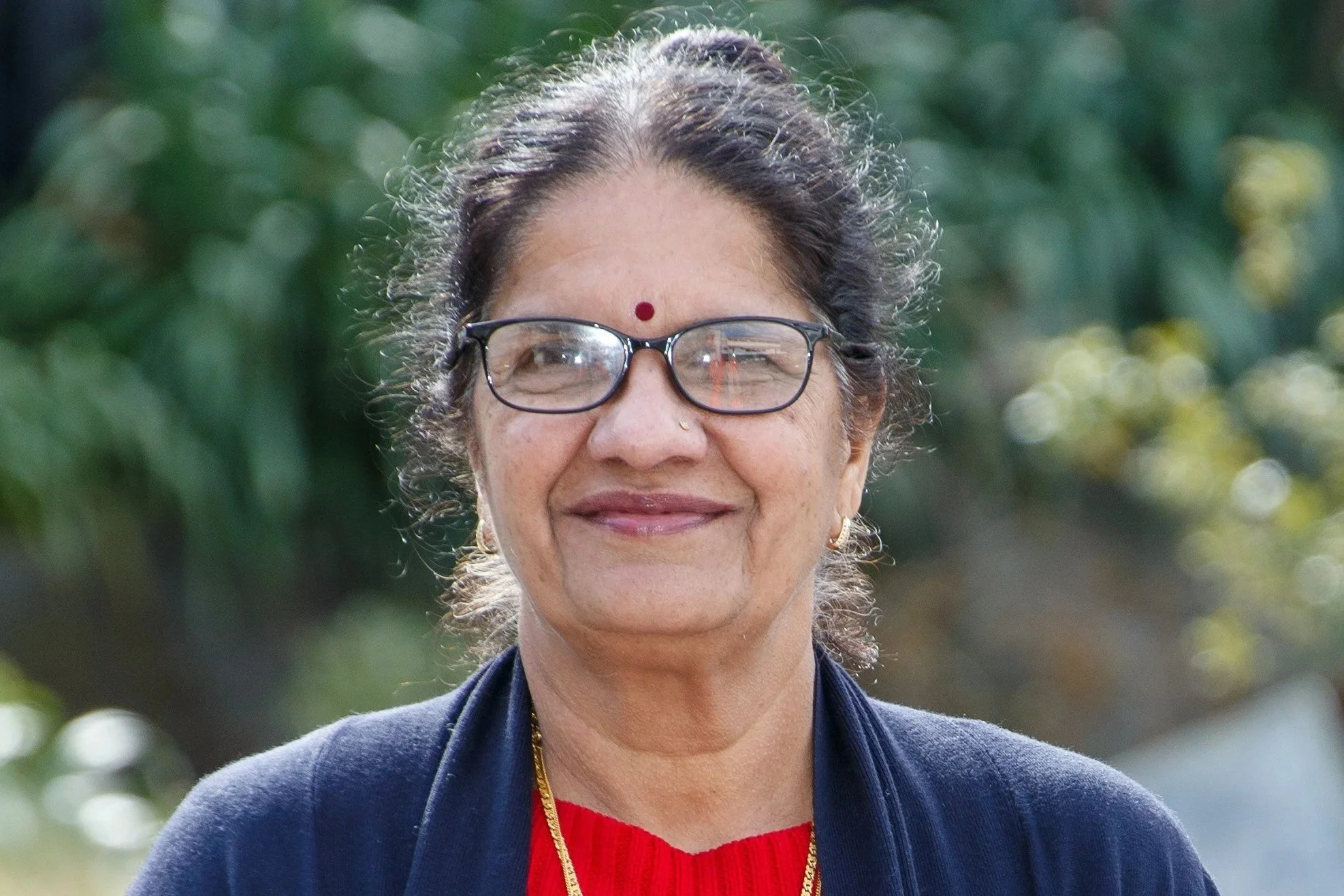
Dr Pushpa Wood ONZM
The communities least likely to be online are often the same ones watching their last bank branch close. Dr Pushpa Wood ONZM has been paying attention to that overlap for a long time.
As Director of the NZ Financial Education and Research Centre at Massey University, Dr Wood researches what actually changes people's relationship with money. She is a former Education Manager at the Commission for Financial Literacy and Retirement Income and a past member of NZQA's advisory group on financial literacy unit standards.
The Reserve Bank of New Zealand has been consulting since February on a proposal called "Keeping Cash Local," a minimum standard that would require banks to maintain cash services across the country. The consultation closes in July. Dr Wood wrote about what's missing from that conversation in March. Her argument: "access to cash is a wellbeing issue, not just a payments issue." The metrics currently driving this decision weren't built to see that.
Marie Silberstein from DECA reached out with some questions. Her responses are verbatim below.
On data interpretation and power
DECA: You make a sharp observation that low cash usage in a community can be misread as a preference for digital payments, when it may simply reflect the absence of cash infrastructure. Who currently holds the power to define and interpret these metrics in the RBNZ's policy process? How might communities most affected by declining cash access be given meaningful input into how "preference" and "need" are measured?
Dr Wood: Currently, financial institutions play a major role — primarily the Reserve Bank, commercial banks, and payments providers — and in my personal view hold disproportionate power in defining what counts as "usage," "preference," and "need."
If we are to look at these definitions, they heavily rely on transaction data and infrastructure availability. This reasoning is circular, and presents a risk: when cash services are withdrawn, cash use falls, and that fall is then interpreted as declining preference.
This concern is well recognised internationally. OECD research shows that financial wellbeing depends not simply on access to products, but on whether systems align with people's lived constraints and capabilities. Usage metrics currently in use capture behaviour under constraint, not freely revealed choice.
To rebalance power in interpretation, policy measurement needs to shift from observed behaviour alone to mixed-method evidence, including:
Lived-experience data (qualitative interviews, community-led surveys) explicitly asking whether observed behaviour reflects preference or necessity
Recognition that distance, transport, disability and caregiving responsibilities shape what is possible, not what is preferred — thus the current data also includes and is layered with social indicators
Rethinking of community governance mechanisms. What I mean by this is that advisory panels are drawn from rural, disability and low-income communities, and this needs to happen early in the metric design rather than consulted after the fact
Without this shift, metrics risk reinforcing existing inequities by mistaking exclusion-induced behaviour for consumer choice — a problem well documented in OECD payment system analysis. (https://formatresearch.com/en/2025/03/27/access-to-cash-and-digital-economy-OECD/)
On overlapping exclusions
DECA: You note that digital exclusion and cash dependence often overlap in the same communities: rural areas, people with disabilities, those with language barriers or low incomes. In your research through the Financial Education Centre, have you found that Māori and Pacific communities face a compounded version of this overlap? If so, what would a culturally responsive cash access framework actually look like in practice?
Dr Wood: Yes. Research consistently shows that Māori and Pacific communities experience layered forms of exclusion where digital barriers, cash dependence, income constraints, language, and geographic factors intersect.
New Zealand evidence shows Māori, Pacific peoples, older adults, people with disability and rural residents are more likely to experience difficulty accessing cash services, particularly deposits and change facilities. At the same time, financial capability research indicates that many mainstream services are culturally misaligned, thus reducing trust and uptake even when nominal access exists.[rbnz.govt.nz][mbie.govt.nz]
Thus, a culturally responsive cash access framework would move beyond generic "coverage" targets and would include co-design with iwi, marae-based enterprises and Pacific community organisations, while recognising cash as part of collective economic life rather than purely individual consumption.
It is also important to recognise collective and intergenerational use of financial products and services including shared accounts, fundraising, koha, and informal support systems — all of which rely heavily on cash.
International Indigenous and Pacific research shows that systems designed with Indigenous knowledge and community leadership significantly improve resilience and trust, especially during disruptions. For further details see the links below:
On the invisible costs of transition
DECA: You argue that vulnerable and rural communities shouldn't bear the adjustment costs of digital transition. What accountability mechanisms would you want to see built into any RBNZ policy framework to make those hidden costs visible, and who should be responsible for remedying them?
Dr Wood: The opinion piece highlights a core finding echoed across international literature: the costs of digital transition are often externalised onto those least able to absorb them.
Research from the OECD and IMF shows that when cash infrastructure declines, affected households and small businesses face higher time costs, transport costs, stress, and operational risk — none of which appear in efficiency or transaction-speed metrics.
https://www.elibrary.imf.org/view/journals/063/2025/009/article-A001-en.xml
Effective accountability mechanisms could include:
Mandatory distributional impact assessments, evaluating who bears new costs before any existing infrastructure is removed
Wellbeing-based indicators, aligned with financial resilience and stress, not just payment efficiency — consistent with OECD financial wellbeing frameworks[oecd.org]
Clear duty-bearers, where banks remain responsible for baseline cash services as part of the social licence of banking — a position increasingly reflected in international policy[cashessentials.org]
The evidence is clear: no amount of financial capability can compensate for poor system design. Accountability therefore must sit with institutions that redesign or withdraw systems, not with individuals required to adapt without support.
On children and financial literacy
DECA: You raise the concern that a generation of children are growing up without a tangible understanding of money. Given that digital-native financial education tools are increasingly the norm in schools, how do you see the role of physical cash in financial literacy programmes? Is there a risk that removing cash from everyday life effectively locks financial understanding behind a digital literacy prerequisite that not all children start with equally?
Dr Wood: In my view, there is a real risk that removing cash entrenches inequality by making financial understanding dependent on digital literacy first.
A large body of education research shows that experiential, tangible learning — including handling physical money — is critical to developing core financial concepts such as value of money, budgeting, saving and self-control, particularly in early school years.
https://www.frontiersin.org/journals/education/articles/10.3389/feduc.2024.1397060/full
https://journals.sagepub.com/doi/pdf/10.1177/2047173417719555
Digital-only tools, while powerful, assume that everyone has:
Device access
Adult mediation that forms part of their usage and learning
Numeracy and digital confidence to operate in the changed environment
However, these assumptions do not hold equally across households. Studies indicate that children from lower-income or digitally constrained environments benefit disproportionately from physical, visible money experiences, which anchor abstract concepts in real-world effort and trade-offs.[cashmatters.org]
Removing cash from daily life therefore risks:
Narrowing the margin between who can "see" money, and who must take it on trust
Locking financial understanding behind a digital prerequisite, compounding existing educational and socioeconomic divides
The evidence supports both approaches — not excluding one or the other — meaning digital innovation alongside continued everyday exposure to cash, especially in education contexts.
The international research aligns strongly with my article's core claim: cash access is not primarily a payments issue — it is a wellbeing, equity, and resilience issue. Treating it as such requires rethinking how we measure preference, distribute transition costs, design systems for diverse communities, and support the next generation's financial understanding.
Dr Wood notes that her responses were prepared with the assistance of Microsoft Copilot