
A summer reading list for Digital Equity
As the year wraps up, DECA has sent a summer reading list and a short note to the MPs whose kete includes digital inclusion. It’s a gentle nudge. Digital access, affordability and skills aren’t side issues anymore. They underpin how well our public services work and how easily people can take part in daily life. The pieces below show this from different angles and point toward the practical steps we can take in 2026.
Here it is in PDF form, in full below or you can scroll straight to end of this blog for the simple list.
Tēnā koe Minister ——————
Before you switch off for the summer, we wanted to drop something into your inbox.
A short reading list. Some light, some heavier. Together they show why Digital Equity keeps turning up at the centre of the challenges our communities face.
If people cannot afford data, do not have a decent device or cannot navigate online systems, they cannot access the services the government is currently investing in. They cannot study easily. They struggle to apply for jobs, book health appointments or manage day-to-day life. Digital Equity is not a niche issue. It is the point where our social, economic and public service goals intersect.
DECA - the Digital Equity Coalition Aoteaora - is a future focused network of community groups, philanthropy, industry and government partners. We champion Digital Equity. We connect evidence, lived experience and innovation. And we advocate for policy and investment that reflects what communities need to thrive in a digital world.
As you read through the list over summer, we hope it prompts a wider reflection. If Aotearoa wants fair and efficient public services, stronger communities and a productive digital economy then we need a strong Digital Inclusion Action Plan. One shaped with community, industry and tangata whenua. One that treats digital access as essential infrastructure.
The reading list includes only two pieces of research from Aotearoa, which highlights the need for stronger local evidence. DECA is helping to build this base.
We have economic studies under way that will give clearer insight into the costs of digital exclusion and the returns on investing in digital equity.
We are partnering across industry and community on the groundwork for a shared Digital Equity Index. Together, this work will support government and sector partners to make well-informed, targeted decisions. To realise its full potential, this programme will need dedicated government backing. DECA can lead and connect this mahi, but it cannot be delivered at scale without Crown support.
We would value the opportunity to brief you and your officials on practical steps that can be taken into 2026 to lift digital participation for every person in Aotearoa.
Thank you for mahi this year. We look forward to working with you in 2026.
Ngā manaakitanga,
Bronwyn Scott and Marie Silberstein
Te Takere | Operations Team
Digital Equity Coalition Aotearoa
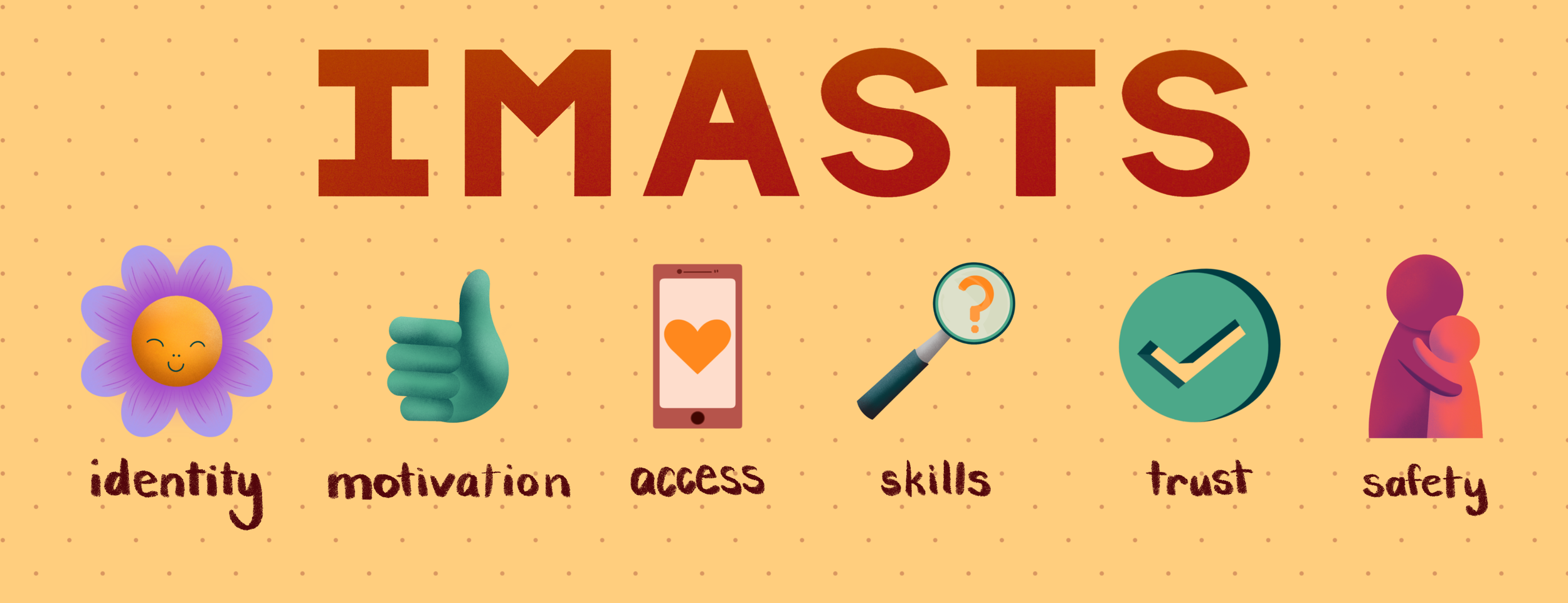
Understanding iMASTS: the six pou of digital equity
First up, we're proud to share the newly published case study by Elle Archer, He Ara Kaunuku: A Pathway Towards Digital Excellence in Aotearoa. He Ara Kaunuku is a digital equity gap analysis tool developed by Archer and her team at the University of Canterbury as part of her MBA programme.
DECA is working to adapt this MBIE-sponsored report on the Kaunuku Pathway into a practical toolkit that regions can use from early 2026. The toolkit will enable regions to collect consistent digital equity data so we can see what is working, where gaps remain and how communities can move toward digital excellence.
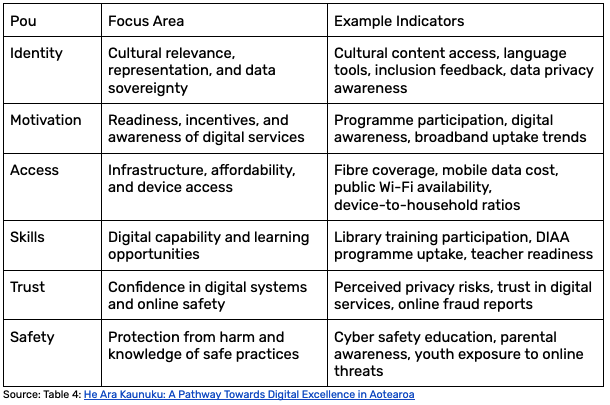
Digital equity goes far beyond access to devices. It shapes how people navigate healthcare, education, work, public transport, justice and democratic participation. True participation requires capability, confidence and cultural relevance. The Kaunuku Pathway, like much digital equity work globally, draws on the iMASTS framework. It describes six pou that determine whether people can use digital technology in ways that support their lives. When any pou is weak, people face risk. When all are strong, communities thrive.
Connectivity: the backbone of digital inclusion
Affordable, reliable internet access is essential for participation in modern Aotearoa. Our Affordable Connectivity Report shows that around 380,000 households are unable to afford the level of connectivity needed for learning, work and essential services. The impact is greatest for families with children, seniors, disabled people and those on lower incomes.
The research combined pricing analysis, community feedback and household affordability indicators. By aligning cost data with real income patterns, we were able to quantify the actual affordability threshold for households across Aotearoa.
The report’s recommendations remain relevant and can be acted on quickly through partnership. A small, well-placed investment in affordability unlocks measurable gains in education, employment and health outcomes.
There is strong momentum across the sector. Organisations including Chorus, Tuatahi First Fibre and OurNet are moving toward equity-focused offerings in early 2026. This aligns with calls from TUANZ and other sector leaders at the 2025 Connecting Aotearoa Summit for targeted government support, so affordability does not remain a barrier.
What other countries have learned
If you scan the research coming out of the UK, Australia and Canada, you see the same thing over and over: digital inclusion delivers huge economic and social returns.
The UK’s economic impact analysis estimates a return of almost £10 for every £1 invested in digital skills. That return comes from higher productivity, stronger employment outcomes and reduced demand on public services.
Australia’s modelling echoes that story. Good Things Australia’s Economic Benefits of Overcoming Digital Exclusion report shows that lifting digital inclusion delivers measurable benefits in health engagement, learning participation and household finances.
The UK Government’s first Digital Inclusion Action Plan provides something Aotearoa currently lacks: a clear nationwide framework across health, education, social services and local communities, grounded in affordability, access, devices, skills and trust.
Across the Atlantic, Canada takes a whole-system approach to digital equity. Their national programmes support affordable access and skills development, while the Digital Charter sets out core principles for trust and participation in the online world. Canada’s Digital Ambition 2024–25 then ties this together with a coordinated government plan to improve digital services and ensure all communities can benefit. Together, these initiatives show what it looks like when digital inclusion is treated as essential national infrastructure.
Across the Tasman, Australia has already done what Aotearoa keeps saying it wants to do: measure digital inclusion properly. Their Digital Inclusion Index sits alongside research by The Smith Family to map, in detail, who can participate in the digital world and who is being left behind. It gives them a national compass. We don’t have that yet. DECA and our partners are building the groundwork for a Digital Equity Index here, but it will take real investment to turn that foundation into a tool the whole country can rely on.
A simple way to make progress

Digital equity is core infrastructure. When people can get online, have a reliable device and feel confident using digital services, the whole system works better. When they cannot, pressure builds. The evidence is consistent across Aotearoa and overseas. The solutions are well understood. A strong Digital Inclusion Action Plan would give the country a clear path and reduce avoidable pressure elsewhere.
Here is the condensed list pulled from the pages above. Specially selected to support the decisions ahead in 2026.
1. He Ara Kaunuku: A Pathway Towards Digital Excellence in Aotearoa
2. Affordable Connectivity Report
3. The economic impact of digital inclusion (UK)
4. Economic Benefits of Overcoming Digital Exclusion Report (AU)
5. Digital Inclusion Action Plan: First Steps (UK)
6. Digital inclusion programs for Canadians
7. Canada’s Digital Charter
8. Canada’s Digital Ambition 2024-25
9. Key Findings from the ARC Linkage Project Advancing digital inclusion in low-income Australian families
10. Australian Digital Inclusion Index